reverse mortgage
When Siblings Disagree About the Family Home
Published July 4, 2026 · By YYZ Mortgage
Three kids. One house. Three opinions.
Sarah wants Mom to sell and move closer. David says a reverse mortgage lets her stay. Lisa is quiet — she was counting on the inheritance. Nobody is wrong. Nobody is talking, either.
Sound like your family? You are normal. Here is how to get everyone on the same page. Do it before the disagreement becomes a feud.
Start with the one rule that settles most fights
It is the parents’ home, the parents’ money, and the parents’ choice.
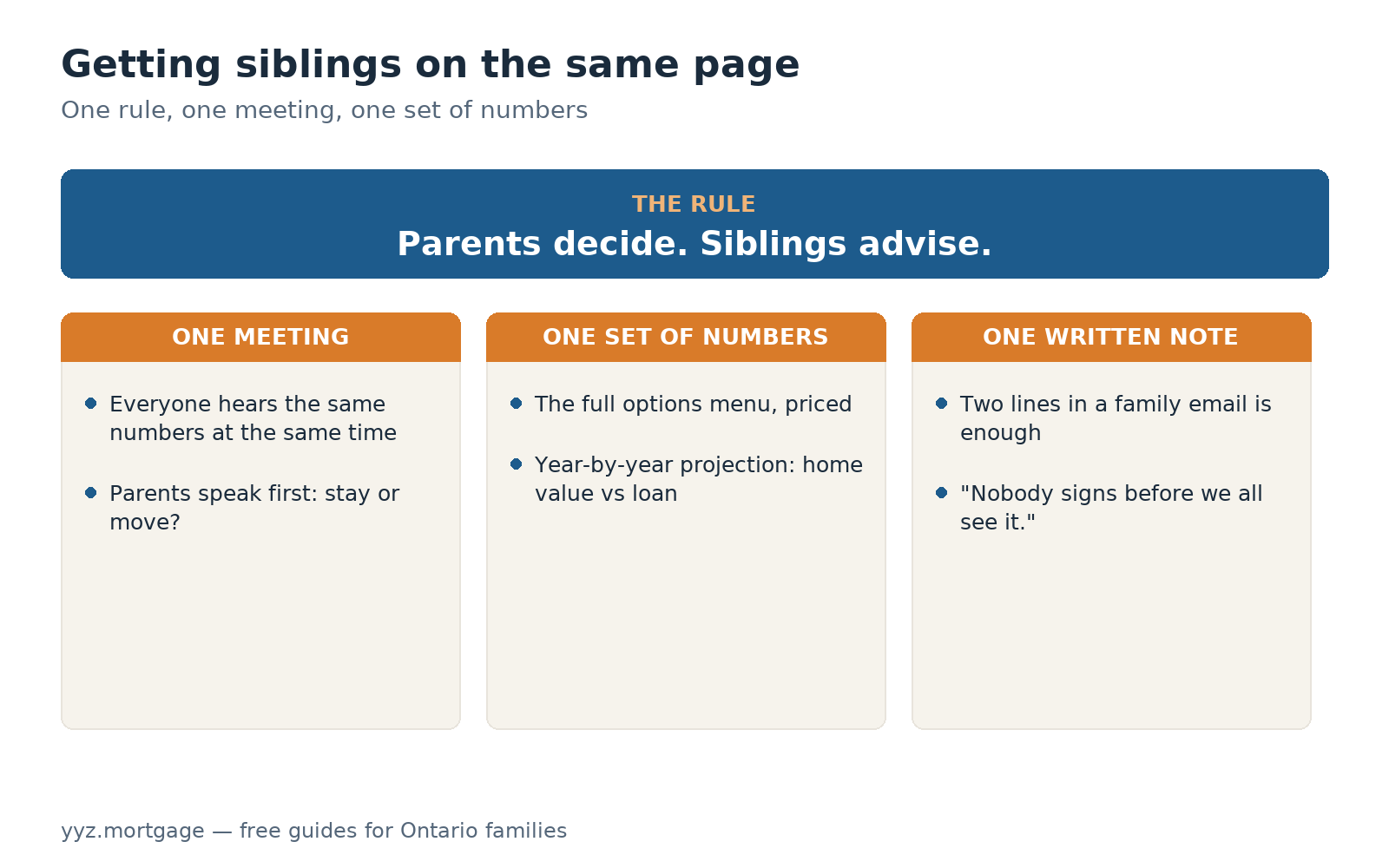
Not Sarah’s. Not David’s. Not Lisa’s inheritance — yet. While parents have capacity, they decide. The kids advise. Say this rule out loud when the family meets. It cools the room fast. It tells each sibling the same thing: no one wins by force.
The kids have a real job too. Good questions. Real numbers. Red-flag watch. Our 10-question checklist is that job, on one page.
Why siblings clash over this
Each sibling is answering a different question:
- One is answering “how does Mom stay safe and happy?”
- One is answering “how do we protect the estate?”
- One is answering “what did Dad promise me once, years ago?”
All fair questions. But a family arguing three different questions never agrees. So answer them in order. Parents’ wellbeing first. Then costs. Then the estate. That order is what parents almost always want. And it is their call (see the rule).
The one meeting that prevents years of fighting
Get everyone in one room, or one call, with the same numbers. Surprises breed doubt. Sunlight kills it. The agenda:
- Parents speak first. Stay or move? What money worry started this?
- The menu, not one item. All the options, priced: benefits checks, tax deferral, HELOC, reverse mortgage, downsizing, a rental suite. The full list is in house rich, cash poor.
- The estate math, honestly. Is a reverse mortgage on the table? Ask for the year-by-year table. Home value in one column. Loan balance in the other. Interest compounds. Every sibling should see the same table — the estate guide walks through an example.
- One next step, written down. Even two lines in a family email: “Mom will get an estimate. Nobody signs anything before we all see it.”
Can’t get everyone live? Then share the numbers in writing, to all siblings, the same day. Same facts, same time. That keeps trust.
The inheritance question, said out loud
Someone is thinking it. Say it kindly and early: “This will use some of the estate. How does everyone feel about that?”
Two facts help the talk:
- The trade is real, but it has a cap. Interest lowers future equity. But keep taxes, insurance and upkeep current, and the debt can never top the home’s fair market value. Heirs never pay from their own pocket.
- Modest borrowing often still leaves the estate growing. A small loan on a rising home can leave more dollars later than today. The projection shows it either way. What eats estates fastest? The maximum lump sum, taken young. Debate that one as a family.
One more thought, said gently. Helping parents live well is the inheritance, doing its job early.
Special cases that need extra care
- The caregiving sibling. They live in the home and help daily. They need to know they can stay. Others may fear favourites. Talk about it plainly. Put any deal in writing with a lawyer.
- The faraway sibling. Distance breeds doubt. Call them first, not last.
- The borrowing sibling. Does one child hope to borrow from the parents? Keep that talk separate, with its own paper. Mixing it in poisons both talks. If the family is weighing a transfer instead, read selling the house to your kids vs a reverse mortgage — the tax traps surprise everyone.
- A sibling pushing too hard. Open the books. Slow the pace. Read the red-flags guide. Pressure from inside the family is still pressure.
When you cannot agree
You do not need everyone to agree. You need everyone informed. One sibling may still object after seeing the same numbers. The parents may proceed anyway. Their home, their call. The objecting sibling got what family owes them: the full facts and a real hearing. Most resentment comes from surprise, not from losing the vote.
Put real numbers under the family talk. The free calculator takes a minute. It gives everyone the same starting point. Want the projection done right? Book a call. We often walk three siblings and two parents through it in one sitting. No one signs anything that day.
This article is general information, not financial, legal or tax advice. Mortgage products are subject to lender approval (OAC). Rates and product details change — confirm current terms before deciding. Speak with a licensed mortgage professional about your situation.
Frequently asked questions
Whose decision is a parent's reverse mortgage — the parents' or the kids'?
The parents'. It is their home and their money. If they have capacity, they decide. The kids' job is to help them decide well: ask good questions, compare options, and watch for red flags. Advice, not control.
Do all siblings have to agree before parents get a reverse mortgage?
No. The law does not need sibling sign-off. But family peace does better with it. One shared meeting with real numbers prevents years of resentment. Aim for informed, even where you cannot get unanimous.
Will a reverse mortgage use up our inheritance?
It reduces the home-equity part of the estate, because interest compounds against the home's value. How much depends on the amount, the rate, the years, and what the home does. Ask for a year-by-year projection so every sibling sees the same math.
One sibling lives with our parents and helps daily. Does that change things?
It often changes feelings, and sometimes it should change the plan. A caregiving child may need housing certainty; the others may worry about fairness. Talk about it openly, and put anything agreed in writing with a lawyer. Silence here is what breaks families.
What if we think one sibling is pushing our parents for their own benefit?
Slow the process and open the books. Ask for all numbers to be shared with everyone. Lenders and the required legal-advice step also screen for pressure. If you suspect real abuse, the Ontario Seniors Safety Line is 1-866-299-1011.
Can heirs keep the house after a reverse mortgage?
Yes. The estate repays the balance — usually within about 180 days — by refinancing or with other funds, and keeps the home. If taxes, insurance and upkeep were kept current, the debt never tops the home's fair market value.
Figures shown are estimates only — not an offer of credit or a commitment to lend. The amount you may qualify for depends on the lender's assessment of your age(s), property type, location, appraised value and any existing liens. Reverse mortgage lenders require independent legal advice before funding. A reverse mortgage is not suitable for everyone; alternatives include refinancing, a home equity line of credit, or downsizing.