reverse mortgage
The Executor's Guide to a Reverse Mortgage Home
Published July 5, 2026 · By YYZ Mortgage
Mom or Dad has passed. There is a reverse mortgage on the house. And the will names you executor.
Take a breath. This is very doable. The industry handles it every week. The rules protect you. Here is the whole job, in order, on one page.
First, the three facts that lower the stress
- The estate gets time. With CHIP, about 180 days. That is roughly six months. Other lenders are similar. Nobody takes the house next week.
- There is no penalty. Prepayment charges are waived on death. The estate repays the balance. That means advances plus built-up interest, and not a dollar more.
- The debt has a ceiling. Were taxes, insurance and upkeep kept current? Then the estate never owes more than the home’s fair market value (what it sells for). That is the no-negative-equity guarantee. A short sale is the lender’s problem, not the family’s.
Everything below is just logistics. Full background: what heirs should know.
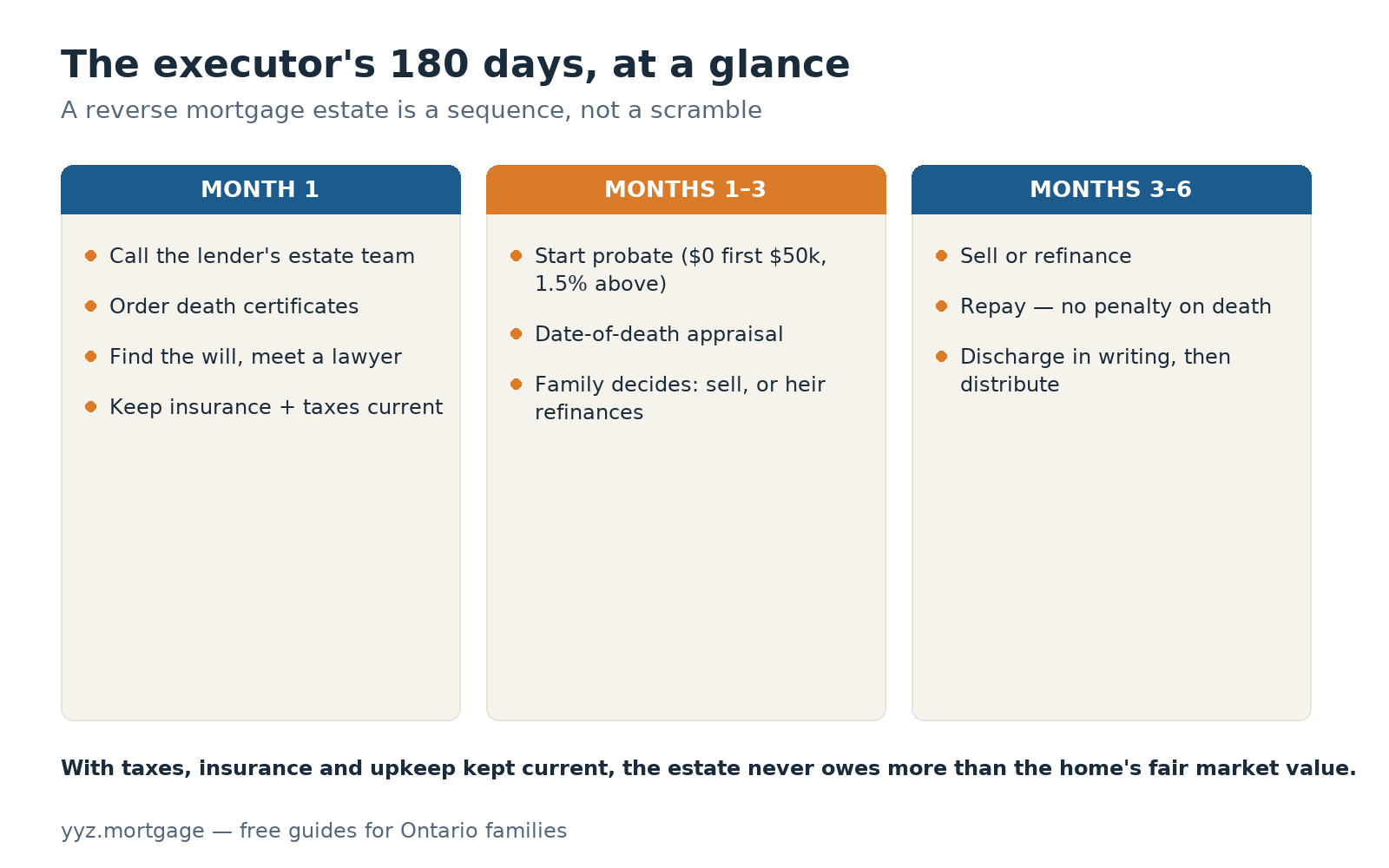
Month 1: notify and gather
- Call the lender. HomeEquity Bank and Equitable Bank both have estate teams. Tell them the borrower died. Ask three things: the current balance, the daily interest, and their exact deadline. Write the answers down.
- Order death certificates. Get several copies. Everyone will want one.
- Find the will. Confirm you are executor. Then see an estates lawyer. One visit now saves five later.
- Keep the house safe. Keep the insurance running. Tell the insurer the home may sit empty. Empty homes need special coverage. Keep the heat on. Keep paying the property tax.
One thing you do not need to do: make loan payments. There are none. Interest simply builds until payout.
Months 1–3: probate
Probate is the court confirming the will and your authority. Most estate home sales need it. Start early. It is usually the slowest step.
Ontario’s cost is the Estate Administration Tax. It is $0 on the first $50,000 of estate value, then 1.5% (that is $15 per $1,000) above it. A $900,000 estate pays about $12,750. Your lawyer files it. You will also file an Estate Information Return. It is due within 180 days of the certificate.
While probate runs, decide the big question with the family:
Keep or sell?
Sell (most common). List the home. Repay the loan from the sale money. The rest goes to the estate. Our guide to selling a parent’s home in the GTA covers the practical side. That includes the tax note below.
Keep: an heir who wants the house repays the loan another way. Usually the heir gets a mortgage of their own on the home. That pays out the balance. We arrange these often. Talk to us early, so the financing is ready when probate is.
Either way, remember: interest builds until payout. A month of drift costs real money. Not panic money, but real.
Months 3–6: close it out
- Sell or refinance. Repay the lender. Get the discharge in writing.
- A tax note for the family. The principal residence exemption shelters the home’s gain up to the date of death. Growth after death can be taxed to the estate. That happens if the home sells above its date-of-death value. The estate’s accountant handles this. Just keep the date-of-death value on file.
- Distribute what is left per the will. Done.
If the timeline gets tight
Life happens. Probate drags. Markets slow. If the deadline nears, call the lender before it arrives. Estate teams see this all the time. A family clearly moving in good faith has options. A silent one does not. Your lawyer can help with that call.
The mistakes to avoid
- Silence. Not calling the lender in month one is the number one error.
- Letting insurance lapse on an empty house. This one can truly hurt. Keeping the home in shape also matters. It is what the no-negative-equity guarantee asks of the estate.
- Paying heirs early. Nothing goes to heirs until the loan, taxes and debts are settled. Your lawyer will insist. Listen.
- Going it alone. You want an estates lawyer and an accountant. Add a mortgage broker if anyone wants to keep the house. Three calls, much smoother road.
Is your family at this step now? We help heirs run the numbers on keep-vs-sell. We arrange the refinancing when keeping wins. Reach us here, whenever you are ready. Reading this before it is needed? Our where-things-are worksheet makes the whole job easier for whoever gets it someday.
This article is general information, not financial, legal or tax advice. Mortgage products are subject to lender approval (OAC). Rates and product details change — confirm current terms before deciding. Speak with a licensed mortgage professional about your situation, and consult an Ontario estates lawyer for legal steps.
Frequently asked questions
How long does the estate have to repay a reverse mortgage?
With HomeEquity Bank (CHIP), the estate typically gets about 180 days after the last borrower dies. Other lenders are similar. The clock is workable — about six months to get probate moving and sell the home — but do not lose the first month. Call the lender early and keep notes.
Does the estate owe more than the house is worth?
No — as long as the taxes, insurance and upkeep were kept current while the loan was open. That is the no-negative-equity guarantee. If the sale comes up short, the lender absorbs the gap. Heirs never pay from their own pockets.
Is there a penalty for repaying a reverse mortgage after death?
No. Prepayment charges are waived on the death of the last borrower. The estate repays the balance — the money advanced plus the interest that built up — and nothing more.
Can the family keep the house instead of selling it?
Yes. The estate can repay the loan with other money, or an heir can refinance the home in their own name and pay out the balance. The choice is repay and keep, or sell and keep what is left.
Does interest keep building after death?
Yes. Interest runs until the loan is repaid. That is a real reason to keep the sale or refinancing moving — every month of delay grows the balance a little more.
What is probate and do I need it to sell the home?
Probate is the court's confirmation that the will is valid and you are the executor. Most home sales from an estate need it. In Ontario it comes with the Estate Administration Tax: nothing on the first $50,000 of estate value, then 1.5% above that. Start the application early — it is often the slowest step.
Figures shown are estimates only — not an offer of credit or a commitment to lend. The amount you may qualify for depends on the lender's assessment of your age(s), property type, location, appraised value and any existing liens. Reverse mortgage lenders require independent legal advice before funding. A reverse mortgage is not suitable for everyone; alternatives include refinancing, a home equity line of credit, or downsizing.